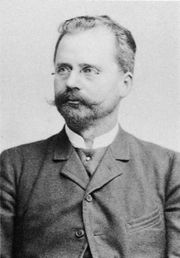
A Swedish engineer of French descent
who, in trying to develop a more efficient steam engine, designed a
turbine that was turned by jets of steam. The critical component (the one
in which heat energy of the hot high-pressure steam from the boiler was
converted into kinetic
energy) was the nozzle from which the jet blew onto the wheel. de
Laval found that the most efficient conversion occurred when the nozzle
first narrowed, increasing the speed of the jet to the speed of sound, and
then expanded again. Above the speed of sound (but not below it) this
expansion caused a further increase in the speed of the jet and led to a
very efficient conversion of heat energy to motion.
Nowadays steam
turbines are the preferred power source of electric power stations and
large ships, although they usually have a different design-to make best
use of the fast steam jet, de Laval’s turbine had to run at an
impractically high speed. But for rockets the de
Laval nozzle was just what was needed.
|